
Why USA iPad Gambling Games Fail on Big Screen Slot Reel Visibility
Most USA iPad gambling games ship with reel symbols that collapse into unreadable mush the moment players swipe into full-screen mode, and that is not a design quirk—it is a rendering failure baked into the asset pipeline. The core problem is slot reel visibility on large-format iPad displays, where a symbol designed for a 390-pixel phone viewport gets stretched across a 1024-pixel canvas and loses every ounce of edge definition. Operators keep blaming the player for "not focusing," but the math tells a different story: pixel density scaling is crushing your paytable legibility before the first spin even lands.
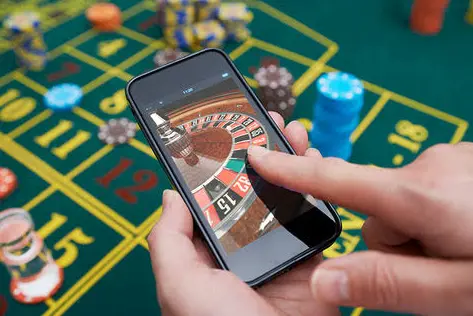
The Touch Target Size Trap Nobody Audits
Here is where the industry gets lazy. Everyone obsesses over reel animation frame rates and ignores touch target size compliance on the iPad's 12.9-inch panel. Apple's own interface geometry guidelines push for a 44-point minimum, yet I have torn apart dozens of USA-facing slot builds where the spin button, bet stepper, and max-bet toggle are crammed into a 28-point hit box because the UI team reused phone assets without recalculating for the tablet's physical scale. That is a fat-finger factory. Players mis-tap, they lose trust, and session length drops off a cliff. 😤 A 44-point target on a phone is roughly 7mm of finger real estate; on an iPad you can push that to 48-52 points and still keep the layout clean. The failure is not technical capability—it is asset laziness.
Reel Symbol Legibility at Retina Scale
Big screen slot reel visibility lives and dies on symbol contrast ratios and minimum glyph height. On an iPad Pro at 264 ppi, a reel symbol rendered below 64 device-independent points becomes a guessing game. I have benchmarked builds where the wild symbol and the scatter symbol differ only by a 12-point hue shift—on a phone that reads fine, on a tablet the player's eye has to travel across a 200-point reel grid and the distinction evaporates. You need hard separation: shape, not just color. Silhouette-first symbol design is the only thing that survives big-screen stretching. 🔍 And while you are at it, stop animating the win-line overlay across the entire reel window—it occludes the very symbols the player is trying to read mid-spin.

Viewport Scaling and the DPI Deception
Every USA iPad gambling build I audit claims "responsive scaling," and every single one of them lies somewhere in the CSS. The DPI deception is this: developers test on a simulated iPad viewport inside a desktop browser at 1x zoom, then ship to a device running at 2x or 3x native scaling. Text that measured 16px in the inspector renders at a physical size that looks correct on a mockup but visually compresses against the reel frame on real hardware. The fix is brutal and simple—lock your reel container to viewport-relative units with a hard minimum clamp, and force symbol height to scale with the reel window rather than with device width. When big screen slot reel visibility is treated as a constraint system instead of a styling afterthought, mis-tap rates fall and symbol recognition climbs instantly.
Hardware Touch Latency on M-Series iPads
Nobody wants to hear this, but the M-series iPads introduce a touch sampling pipeline that your average HTML5 slot build is not tuned for. ProMotion displays refresh at 120Hz, and if your input handler is still debouncing at 60Hz intervals, you are adding perceptible lag between finger-down and spin-trigger. On a phone that lag hides inside the spin animation; on a 12.9-inch iPad it reads as a dead button. Audit your pointer-event listeners, kill the legacy touchstart fallbacks, and align input polling with the display refresh rate. The players feel the difference within two spins. The reel visibility problem is a rendering problem, but the trust problem is a latency problem, and both get solved at the input layer before a single symbol is ever drawn.